
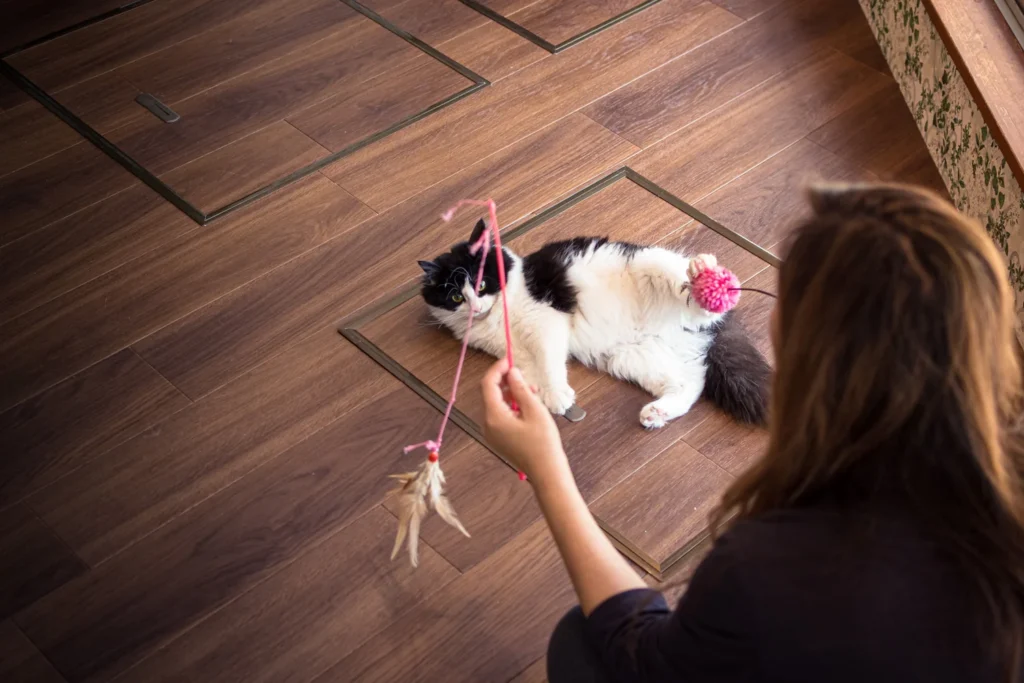
The enigmatic world of feline behavior has long fascinated pet owners and scientists alike. While cats are often perceived as aloof and independent creatures, their play behavior offers a window into their complex social interactions and intrinsic instincts. Unlocking the secrets of feline play behavior not only enhances our understanding of these mysterious animals but also enriches the bond between cat and owner. This article delves into the intricacies of feline play, exploring its evolutionary roots, its role in development, and how it manifests in domestic cats.
The Evolutionary Roots of Feline Play
Play behavior in cats is deeply rooted in their evolutionary history. As descendants of solitary hunters, cats have developed play behaviors that mimic essential survival skills. In the wild, kittens learn to stalk, pounce, and capture prey through play, honing the skills necessary for hunting.
This behavior is not merely recreational; it serves as practice for real-life scenarios. Even domesticated cats, whose survival does not depend on hunting, retain these behaviors. Play is an outlet for their predatory instincts, which remain a core aspect of their genetic makeup.
The Role of Play in Development
For kittens, play is integral to physical and cognitive development. From a young age, kittens engage in rough-and-tumble play with their littermates, which helps develop motor skills, coordination, and strength. Through play, they learn about boundaries and social hierarchies, which are crucial for their social development.
Moreover, play stimulates cognitive development by encouraging problem-solving and decision-making. When a kitten chases a toy or a moving object, it learns to assess speed, distance, and timing. These cognitive challenges are vital for a kitten’s growth and prepare it for various life situations.
Manifestations of Play in Domestic Cats
Understanding how play behavior manifests in domestic cats requires observing a range of activities. Common forms of play include chasing, pouncing, batting, and biting objects like toys or even household items. Each play behavior mimics a different aspect of hunting or social interaction.
Chasing: This behavior simulates the pursuit of prey. When a cat chases a moving object, it is engaging its predatory instincts, practicing the skill of following and catching a target.
Pouncing: Pouncing is a critical component of hunting, allowing cats to ambush their prey. In play, this behavior is often seen when a cat suddenly lunges at a toy or another cat, mimicking the surprise attack used in hunting.
Batting and Biting: These behaviors allow cats to manipulate and subdue their ‘prey’. When a cat bats at a toy with its paws or bites it, it is practicing the skills needed to handle and kill prey in the wild.
The Social Aspect of Feline Play
While cats are typically solitary hunters, play behavior also has a significant social component. Especially in multi-cat households, play serves as a means of communication and social bonding. Cats can engage in play fighting, which looks aggressive but is usually harmless and playful. This interaction helps establish social hierarchies and build relationships.
Owners often become part of their cat’s social play. Interactive play with humans, such as using toys that mimic prey, can strengthen the bond between cat and owner. It is important for owners to recognize and respect their cat’s play signals to avoid overstimulation or aggression.
Recognizing Healthy Play vs. Aggression
Understanding the difference between healthy play and aggression is crucial for cat owners. Healthy play is characterized by relaxed body language, including loose tails and ears set in a neutral position. Playful cats may vocalize with soft chirps or meows and will often take turns in play, allowing each participant to ‘win’ at times.
In contrast, aggression is marked by tense body language, hissing, growling, and fixed, intense stares. If play escalates to aggression, it is essential for owners to intervene calmly by redirecting the cat’s attention to a toy or giving it space to calm down.
Enhancing Play for Enrichment
Providing opportunities for play is essential for a cat’s physical and mental well-being. Enrichment through play can prevent behavioral issues that arise from boredom and inactivity. Here are some ways to enhance play for your cat:
Interactive Toys: Toys that encourage chasing, such as feather wands or laser pointers, can stimulate a cat’s hunting instincts and provide vigorous exercise.
Puzzle Toys: These toys challenge a cat’s problem-solving skills and provide mental stimulation. They can be filled with treats or kibble to motivate play.
Environmental Enrichment: Creating an environment that encourages exploration and play is vital. This can include cat trees, tunnels, and scratching posts.
Scheduled Playtime: Consistent play sessions help establish a routine, providing cats with regular physical activity and interaction.
Conclusion
Unlocking the secrets of feline play behavior offers profound insights into the nature of cats and their interactions with the world. By recognizing the evolutionary, developmental, and social aspects of play, owners can better meet the needs of their feline companions. Play is not just a pastime for cats; it is an essential component of their overall well-being. By fostering an environment that supports healthy play, we can enhance the lives of our cats and strengthen the bonds we share with them.


