
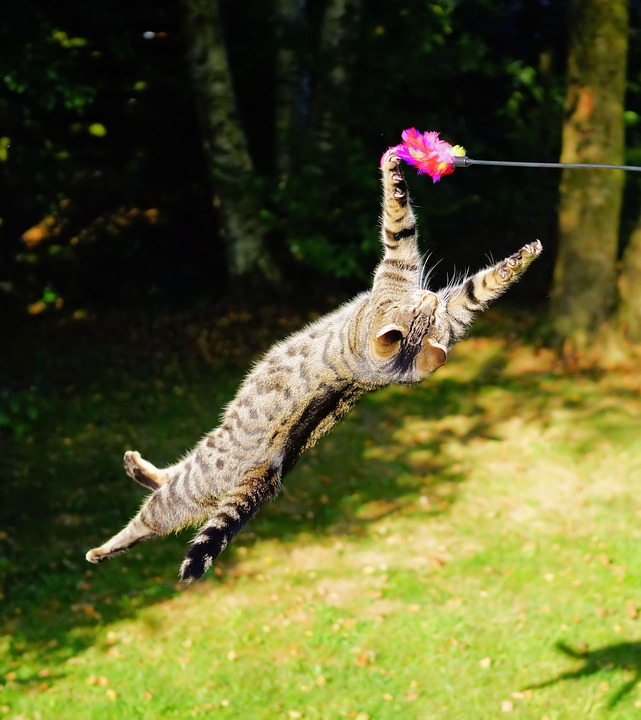
The domestic cat, Felis catus, is a creature of grace and mystery, often found lounging on sunlit windowsills or curled up in cozy corners. Despite their comfortable domestic lives, cats retain an intrinsic wildness most notably expressed through their hunting instincts. This article delves into the enigmatic world of feline hunting behavior, exploring its roots, purpose, and the fascinating ways it manifests in our beloved pets.
The Evolutionary Roots of Feline Hunting
Unlike many other domesticated animals, cats have retained much of their ancestral behavior, a testament to their relatively recent domestication. Felines are obligate carnivores, meaning their diet must consist primarily of meat. This dietary requirement is the driving force behind their hunting instincts.
In the wild, the ancestors of domestic cats were solitary hunters, relying on their keen senses and agility to capture prey. This evolutionary background explains many aspects of a cat’s behavior today. Understanding a cat’s hunting instinct requires examining these ancestral traits, which include keen senses, stealth, and a specialized anatomy designed for predation.
Keen Senses: The Feline Advantage
Cats possess extraordinary senses that make them highly effective hunters. Their eyesight is adapted to detect the slightest movement, even in low light conditions, thanks to a high concentration of rod cells in their retinas. This adaptation allows them to hunt during dawn and dusk, times when their prey is most active.
Additionally, cats have an acute sense of hearing, capable of detecting frequencies that are inaudible to humans. This sensitivity allows them to hear the high-pitched sounds of small rodents and other prey. Their sense of smell, although not as developed as in some other predators like dogs, still plays a crucial role in detecting prey and navigating their environment.
Stealth and Patience: The Art of the Hunt
A cat’s hunting strategy is a masterclass in stealth and patience. Unlike endurance hunters, cats rely on short bursts of speed and precision. They stalk their prey silently, using their retractable claws to reduce noise and their whiskers to detect nearby objects.
This stealthy approach is coupled with incredible patience. Cats can spend long periods observing their prey, waiting for the perfect moment to strike. This behavior is often seen in domestic cats as they watch birds or small animals from a window or during play.
Anatomical Adaptations: Built for Predation
The physical traits of cats are finely tuned for hunting. Their flexible spine allows for incredible agility and speed, while their powerful hind legs enable explosive leaps. Sharp, retractable claws and pointed teeth are ideal for seizing and killing prey quickly.
These anatomical features are complemented by a cat’s natural agility and balance, which are enhanced by a highly developed vestibular system. This system, located in the inner ear, helps cats maintain balance and orient themselves, even when falling from heights.
Hunting Behavior in Domestic Cats
Even though many domestic cats are well-fed and live in environments free from the need to hunt for survival, their instincts remain strong. This is often observed through play, which mimics the behaviors of stalking, pouncing, and capturing prey.
Toys that mimic the movements of prey, such as feather wands or small balls, can trigger a cat’s hunting instincts, providing them with both physical exercise and mental stimulation. Play is not just a substitute for hunting; it is a crucial component of a cat’s well-being, offering an outlet for their natural behaviors and helping to prevent boredom and associated behavioral issues.
The Role of Play in Satisfying Hunting Instincts
Play serves as an essential outlet for a cat’s predatory instincts, allowing them to engage in a sequence of behaviors that mimic hunting. This sequence – stalk, chase, pounce, and capture – is deeply ingrained and provides mental and physical benefits.
Engaging in regular play sessions with your cat can help satisfy their hunting instincts, reduce aggression, and strengthen the bond between pet and owner. Toys that simulate prey movements, such as laser pointers or motorized toys, can be particularly effective.
Understanding and Managing Hunting Behavior
While it is natural for cats to hunt, this behavior can sometimes pose challenges, especially for outdoor cats that may impact local wildlife populations. Understanding and managing this behavior is crucial for responsible pet ownership.
Encouraging indoor play can help mitigate the impact on wildlife, while providing enrichment through interactive toys and climbing structures can keep indoor cats engaged. Additionally, understanding the times of day when your cat is most active can help you schedule play sessions that align with their natural rhythms.
Training Techniques to Channel Hunting Instincts
Training can be an effective way to channel a cat’s hunting instincts in a positive direction. Clicker training, for example, can be used to teach cats to perform specific actions on cue, providing mental stimulation and reinforcing positive behaviors.
By using training to redirect undesirable hunting behaviors, such as attacking human feet, owners can help their cats express their natural instincts in a safe and controlled manner. Training also provides an opportunity for owners to bond with their cats and better understand their unique personalities.
The Ethical Considerations of Feline Hunting
The impact of domestic cats on wildlife, particularly birds and small mammals, is a topic of ongoing debate. While it is important to acknowledge the natural instincts of cats, responsible pet ownership involves taking steps to minimize their impact on local ecosystems.
Keeping cats indoors or providing them with supervised outdoor access can help protect wildlife. Additionally, providing sufficient environmental enrichment and play opportunities can reduce a cat’s motivation to hunt.
Conclusion
The hunting instincts of cats are a fascinating blend of evolutionary adaptations, sensory prowess, and behavioral traits. Understanding these instincts not only deepens our appreciation for these enigmatic creatures but also informs responsible pet ownership.
By providing opportunities for play, enrichment, and training, cat owners can help their feline companions express their natural behaviors in ways that are safe, satisfying, and environmentally conscious. In doing so, they honor the wild spirit that remains at the heart of every domestic cat, ensuring a harmonious coexistence with both their pets and the natural world.


